Wednesday, August 20, 2014

Legal Geek No. 22: Race Riots and Constitutional Rights

Welcome back to Legal Geek. This week, we take a look at the ongoing protests in Ferguson, Missouri and whether constitutional rights are being infringed by acts of the local police and government in that area.

https://archive.org/details/LegalGeekEp22

Following the fatal shooting of black teenager Michael Brown by a police officer on August 9 in this suburb of St. Louis, a series of memorials and protests began the next day. The largely white police department was believed to have acted too harshly in trying to apprehend Brown, and the conflicts have escalated multiple times over the past two weeks.

The highly militaristic gear and responses to protests used by the local police departments in Ferguson have been largely shunned in the media and across the nation. This period of race riots has become the most notable in the U.S. since the 2001 race riots in Cincinnati and the 1992 race riots in Los Angeles following the Rodney King incident. With social media now a factor, the world is watching closely and some organizations like the Islamic Republic News Agency and the Russian Foreign Ministry have called the U.S. and Nobel Peace Prize winner Barack Obama hypocrites for ordering other nations to provide human rights while not taking care of the same problems within their own borders.

However, have these police departments infringed on constitutional rights of the people in Ferguson by the actions taken to date?

The first amendment to the U.S. Constitution protects the right of the public to peaceably assemble together and also protects the freedom of the press to cover events. Missouri governor Jay Nixon has imposed nightly curfews in Ferguson to try and curtail the violence and riots, which is a strategy that worked to end the week-long 2001 Cincinnati riots. But this curfew has led local police to arrest numerous journalists trying to cover the story as well as organizers of peaceful protests.

The 14th Amendment to the Constitution and Supreme Court decisions in the 1930's (Near vs. Minnesota and DeJonge vs. Oregon) have incorporated these two constitutional rights so as to apply to state and local governmental agencies, such as those acting in Ferguson. By imposing a curfew across the board and enforcing it without acknowledging the exceptions used for workers in the Cincinnati curfew of 2001, the Ferguson police are almost certainly infringing the freedom of the press right under the 1st Amendment.

Even Barack Obama has publicly come out against some of the actions that have occurred against the press. The curfew likely also is infringing the right to peacefully assemble, but that is more of a gray area with the protesters frequently turning to violence which can and must be curtailed by the police for public safety reasons.

Bottom Line: If the actions of governor Nixon and the local authorities is ever challenged in court, it is hard to see how their actions will be deemed anything but unconstitutional. Until police forces are more representative of the communities in which they operate and operate with the utmost caution at all times, these sad incidents and the subsequent protests will continue to happen over time. Hopefully future incidents can be handled better and in compliance with the U.S. Constitution, which is the most important mandate of our government.

Thanks for reading. Please provide feedback and legal-themed questions as segment suggestions to me on Twitter @BuckeyeFitzy or in the comments below.

Tuesday, August 12, 2014

Legal Geek No. 21: The Legal Effects of Suicide

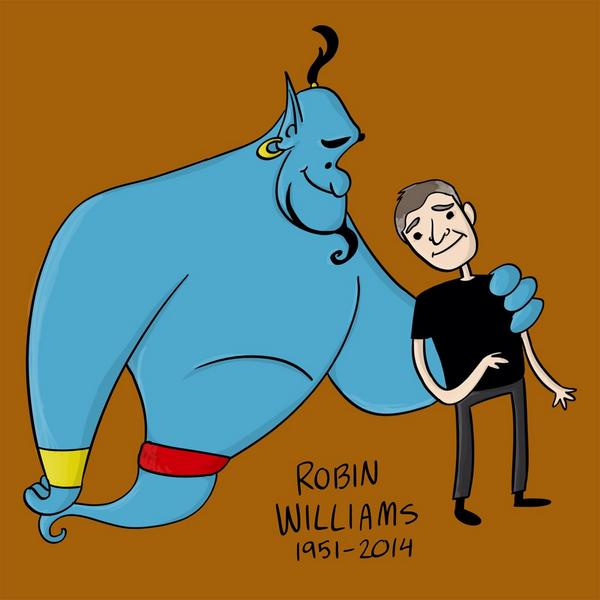
Welcome back to Legal Geek. This week, we honor the recently-passed Robin Williams and take a look at whether there are any legal effects caused by the commission of suicide.

https://archive.org/details/LegalGeekEp21

On Monday, news broke that famous comedian and actor Robin Williams had died at the age of 63. He certainly made the world a better and happier place with his art, and he will be sorely missed. Sadly, it appears that his death was a suicide likely fueled by the depression he has battled with for many years. Even though the subject is hopelessly morbid, this begs the question: what, if anything, are the legal ramifications of suicide?

Certainly if you've ever looked over a life insurance policy, you are likely aware that most policies deny payout in the event of suicide, but only if that happens within a set time period in the contract such as the first two years the policy is in effect. While insurance payouts are hopefully not an issue for the family of Robin Williams, it is something to be aware of. This is just based on contract though, not the law itself.

Almost all current laws dealing with suicide are criminal laws regarding assisting someone else commit suicide. Many states had laws on record making suicide itself a felony up through about the 1960's, but no state still has any such law on the books (and they were rarely, if ever, enforced back when these laws existed, because the person is already dead). Regardless, some states still hold that suicide is a common law crime, under judge made law, and this can bar damages recovery for the deceased's family in an ongoing lawsuit, in some circumstances. Essentially, this long shot is the only significant effect of suicide that may be legally binding on the survivors.

There is no automatic loss of copyrights or other IP rights as a result of suicide. Indeed, the estate of someone artistic like Williams may very well hold some valuable copyrights for the next 70 years past his death, and this may be a continued revenue stream for his heirs for many years to come. So beware bloggers, you may want to be careful with using the copyrighted clips and pictures of Williams that will inevitably be shared like wildfire over the next few days and weeks.

Bottom Line: Suicide and depression simply stink, and we lost a great one this week. Although his family will have plenty to grieve about in the coming months, at least this act carries essentially no adverse legal consequences for them. Let's hope we as a society find better ways to help those who need it in the future, as none of us should have to experience the devastation that is suicide.

And Robin, we will miss you. "You ain't never had a friend like me." Indeed, we haven't.


(copyright Carter Johnson, check out her stuff @carterejohnson)

Thanks for reading. Please provide feedback and legal-themed questions as segment suggestions to me on Twitter @BuckeyeFitzy or in the comments below.

Thursday, August 7, 2014

Legal Geek No. 20: Copyright Monkeys

Welcome back to Legal Geek. This week, we take a look at this week's hot copyright controversy, that being whether a photographer has rights to shots taken by a monkey with his camera.

https://archive.org/details/LegalGeekEp20

Back in 2011, British photographer David Slater spent a great deal of time and money taking a wildlife photography trip to Indonesia. During this trip, a pack of monkeys, specifically crested black macaques, grabbed one of Slater's camera and ended up taking hundreds of pictures. A couple of these pictures ended up being good looking selfies, which made for a great story and a good selling photo for Slater.

However, the Wikimedia Foundation has this week refused to delete the photos from wikipedia, arguing that there is no valid copyright in the images. Essentially, Wikimedia argues that the only authorship of those photographs was by the monkey itself, and copyright law does not protect or grant rights to non-human authors. Thus, the photo is allegedly in the public domain. But is this true?

I agree with most copyright experts that U.S. and European copyright laws provide rights to creators of works of authorship only when the author is human. The problem for Slater here is that he did not add anything to the monkey selfies, he did not frame or arrange the shots and did not alter them or improve them upon bringing the photos back home. The author of a photograph is the one who snaps the shutter, absent some of these other possible additions to the creative expression or work. Slater did not add anything here, and so if there could be a copyright, it would be owned by the monkey, which is impossible under current laws.

Granted, this is a bad situation for creative types like Slater who spend thousands of dollars trying to get one lucrative photo like this monkey selfie. But copyright case law is clear, co-ownership or transferred ownership only comes by written contract in work made for hire, or when actual authorial participation was added to the work. Merely transporting the camera to Indonesia and owning it is not enough to pass the sniff test. Wikimedia is correct, in this case.

Like other IP law doctrines, copyright law does change and reform with the times. Perhaps the era of everyone having a smartphone in the pocket will force another major revision to copyright law to account for complex situations such as this. Just like when the law had to begin adjusting to the Internet age in 1998 with the DMCA.

Bottom Line: Today's copyright law does not allow for a copyright when a monkey steals a camera and takes a selfie. Perhaps when the Planet of the Apes timeline begins, we will adjust our laws and give unto Caesar what is his.

Thanks for reading. Please provide feedback and legal-themed questions as segment suggestions to me on Twitter @BuckeyeFitzy or in the comments below.

Thursday, July 24, 2014

Legal Geek No. 19: Was Veronica's Comcast Call Illegal?

Welcome back to Legal Geek. This week, we take a look at wiretapping laws to determine whether Frogpants friends Veronica and Ryan did anything illegal in recording and posting the phone call of them trying to disconnect Comcast service last week.

Anybody who has dealt with canceling cable services knows what a pain companies like Comcast and Time Warner can be on the back end. However, you hopefully haven't experienced the 10+ minutes of agony that Veronica and Ryan did, and it's worth a listen.

Clip of call available here: https://www.youtube.com/watch?v=yYUvpYE99vg

One of the more typical responses to this viral call has been to ask whether the customer violates any wiretapping laws and the rights of the Comcast call center employee by recording and distributing such a call. It even came up on Current Geek briefly last week.

Wiretapping laws have protected telephone, personal, and electronic communications since the late 1960's, and these laws have become more vital over time as privacy rights erode away for the general public in many areas. Federal and state laws prohibit any unauthorized interception, recording, distribution, or use of a private conversation, although there are numerous limits and exceptions to this law.

One limit is consent of one or both of the parties to the recording. 38 states and Federal law allow wiretapping of any conversation when one of the parties consents, which would automatically protect Veronica and Ryan as participants on this call. However, California is one of the few states that requires consent of all parties to make wiretapping legal.

However, there may be implied consent of the Comcast employee here because his company informs customers that each call may be monitored or recorded for quality assurance purposes, which is done precisely to avoid federal wiretapping laws and FCC regulation violations.

However, the California law has another important limit in that it applies only to confidential communications, in other words, those conversations where an expectation of privacy is present. It would likely be impossible for Comcast or its employee to prove that they have any expectation of privacy on a business call from a consumer such as this. Their own recording of these same calls tend to prove otherwise.

Bottom Line: Veronica and Ryan are safe from federal and California wiretapping laws thanks to consent and/or the call not having an expectation of confidentiality or privacy. That's good news for our friends and hopefully also for Comcast, which will hopefully change company practices and policies after the fallout from one employee following questionable company orders.

-----

Thanks for reading. Please provide feedback and legal-themed questions as segment suggestions to me on Twitter @BuckeyeFitzy or in the comments below.

Thursday, June 26, 2014

Legal Geek No. 18: Supreme Court Clarifies More Limits on Software Patents

Welcome back to Legal Geek. This week, we continue our review of recent Supreme Court decisions affecting the tech world by analyzing the decision in Alice Corp. v. CLS Bank.

Like many Supreme Court cases, including the copyright case covered last week, a primary issue is whether the resulting ruling will affect more than just the narrow facts at hand in the case. For the Alice case, the simple question was whether a patent claiming a computerized trading platform for eliminating settlement risk in financial transactions was patentable subject matter. The broader question was whether software patents are actually patentable subject matter.

As is typical in the decisions, the Supreme Court answered the facts at hand and did not address the broader issue, likely leaving the big question of software patents to be decided by Congress rather than the courts. Thus, the reports that software patents were greatly curtailed by this decision are simply false.

The use of a third party in financial transactions to eliminate settlement risk was deemed by a unanimous court to be what is called merely an Abstract idea, in other words a well known principle or building block of economic practice. Moreover, the claims that add generic computer system elements to perform the methods were ruled to not be patentable subject matter either.

Put simply, a patent attorney cannot merely wordsmith claims and add simple elements to make a non-patentable Abstract Idea into a valid patent claim. Again, from a common sense perspective, the Supreme Court has acted logically in stopping gamesmanship based solely on wording of claims rather than substance.

However, the Court made it abundantly clear by comparisons to previous Abstract Idea cases that this analysis has not changed, it was merely applied to the facts in this case. Thus, software patents in the broad sense are still as patentable as they have always been, and that legal field will continue to thrive.

Bottom Line: If software is to be deemed non-patentable subject matter, that decision will clearly not come from the Supreme Court. The standards will remain fuzzy as a result of the nature of software, but there is good innovation there and the courts and Congress are not likely to take away the patent rights to this entire field.

Thanks for reading. Please provide feedback and legal-themed questions as segment suggestions to me on Twitter @BuckeyeFitzy or in the comments below.

Legal Geek No. 17: Supreme Court Deals Death Blow to Cordcutting Option Aereo

Welcome back to Legal Geek. This week, we review the impact of this week's Supreme Court decision that killed one cord cutting option called Aereo.

The Supreme Court always releases a high number of decisions in June at the end of their annual term, and the complex intellectual property cases always seem to be left to this time period. One of the most notable decisions came down this week, as the Aereo service was confirmed to be copyright infringement by the Supreme Court.

For those unfamiliar with Aereo, this was a subscription service that allowed users to watch over-the-air television broadcasts by intercepting the signals with miniature antennae. Basically, a user decided what program he wanted to watch and Aereo opened access to the channel by sending the intercepted antennae signal to the user's device. Effectively, this was a cord-cutting system because it allowed for live and cable programming to be viewed without a cable or satellite TV subscription.

The 6-3 majority opinion held that the transmission of these intercepted programs to user devices was enough to qualify as a public performance of those programs, which is one of the rights that copyright protection includes. Just because the programs were individually transmitted in a passive manner on an individual by individual basis, this was deemed by the court to be analogous to a performance of the program through an individual conduit to many users (which would more clearly be improper under copyright precedents). On this point, I think that common sense won the day.

Thus, Aereo will be shut down, which all 9 justices agreed should happen, even though the dissent disagreed on the grounds for shutting this down. The Court explicitly stated that this case does not decide whether copyright infringement occurs with cloud computing or remote storage DVR's, so this really just shuts down the most illegitimate of the cordcutting services. And of course, this decision has no effect on the more popular services like Netflix and Amazon Prime, which pay royalties to stream the programs delivered to subscribers. Indeed, Aereo could make the same negotiations and stay in business, should it choose to continue on the right side of the law.

Bottom Line: Cordcutting and cloud computing live on, while Aereo will not in its current form. Much like the aftermath of the Napster decisions in the music industry, we still appear to be headed toward a great place for consumers of live and recorded television and films.

Thanks for reading. Please provide feedback and legal-themed questions as segment suggestions to me on Twitter @BuckeyeFitzy or in the comments below.

Thursday, June 19, 2014

Legal Geek No. 16: Evaluating the Copyright and Trade Dress Claims in Hex vs. Magic Litigation Battle

Welcome back to Legal Geek. This week, we finish our review of the legal battle brewing between Wizards of the Coast and Cryptozoic by looking at the merits of Wizards' copyright and trade dress claims.

The trade dress claimed by Wizards is the overall product appearance of Magic and its computer counterparts, alleged to include the packaging and 15-card contents of booster packs, the overall visual aspects of the cards, and the like. However, Wizards likely shot this claim in the foot by admitting all of this alleged trade dress has some functionality.

Functional elements are not protectable trade dress under the Lanham Act, so this trade dress claim is likely dead on arrival. I expect the trade dress claim to be decided in favor of Hex on initial summary judgment.

Turning to copyright, Wizards has set forth a compelling story of all the elements of Magic that Hex has allegedly copied. These copied aspects include the major types of cards, ability names on creatures, the same five colors of cards, a list of functionally identical cards, the background game appearance on a computer display, the same general rules of deck construction and combat during play, and the use of tapping cards to show use.

The vast majority of these appear to be the underlying facts or ideas that are not protectable creative expressions under copyright law. Many knockoff video games were able to escape copyright infringement over the last two decades on similar grounds, but some courts (including one involving a Tetris clone in 2012) have recently taken to applying copyright infringement where the amount of total elements copied is significant and overwhelming. Based on Wizards' complaint, that could very well be the case here.

So the copyright claim may come down to whether the judge or jury is sympathetic to the idea that knocking off most of the major aspects of a computer game is wrong. That's incredibly hard to predict, so the copyright claim will be the most interesting going forward.

Bottom Line: Wizards will likely prevail on the patent claim but will lose on the trade dress claim, which means the unpredictable copyright claim will determine whether Hex will be allowed to continue in this market for the long term. It will be certainly fun to see how this plays out in court between two game company titans.

Thanks for reading. Please provide feedback and legal-themed questions as segment suggestions to me on Twitter @BuckeyeFitzy or in the comments below.